There are a lot of myths and misunderstandings about hepatitis B. So a bold new public awareness campaign has launched in Australia to make things clear, with simple facts that help reduce fear, worry and misinformation.
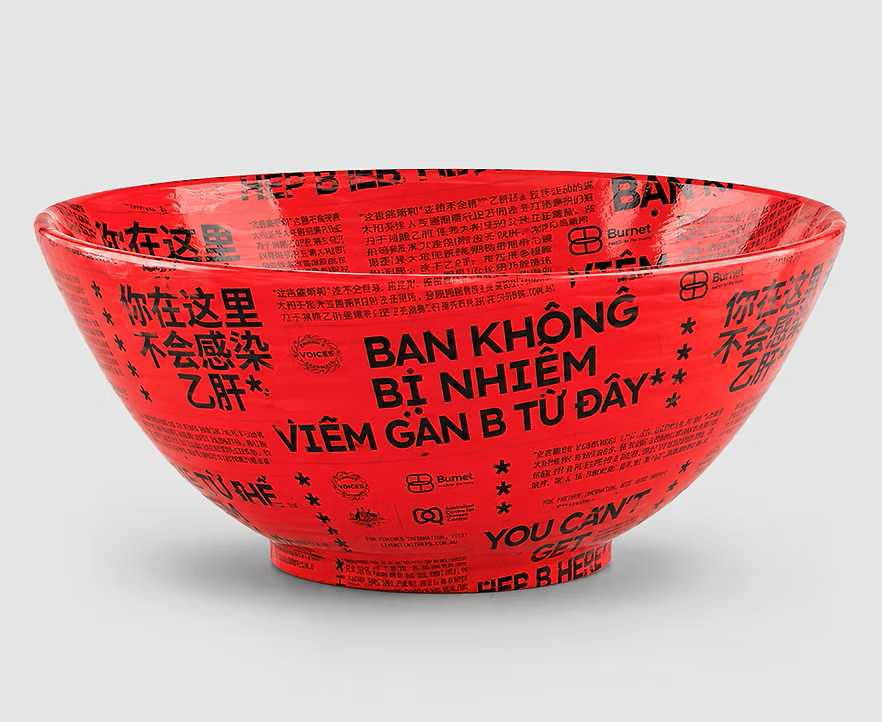
The campaign aims to improve knowledge and information around hepatitis B, delivering a simple but powerful message to the communities across Australia most affected by the virus: You Can’t Get Hep B Here.
Developed by the Burnet Institute and Hepatitis B Voices Australia, and funded by the Australian Centre for Disease Control (CDC), the campaign was co‐designed with community members to ensure the messaging is culturally relevant and grounded in the lived experience of people with hepatitis B.
The data makes it clear why culturally tailored outreach is essential. Almost 40 per cent of people with hepatitis B in Australia speak a Chinese language at home, and 15.5 per cent speak Vietnamese, yet information in these languages has remained scarce. So the campaign materials are available in Vietnamese and Chinese, with radio advertising airing in Vietnamese, Cantonese and Mandarin.
The campaign explains and reinforces some key basic messages about the virus and how to live with it:
- Eating together is something to enjoy, not worry about. Hepatitis B isn’t spread through shared food or utensils.
- There’s no need to avoid shared spaces. Hepatitis B isn’t transmitted through sharing toilets, swimming pools or being near someone with hepatitis B.
- Love and connection are not things to avoid. Hepatitis B isn’t spread through everyday touch or affection.
- Hepatitis B is preventable with a safe and effective vaccine. It provides long-term protection and is part of Australia’s routine immunisation program.
- You can ask your doctor or nurse for a hepatitis B test. It’s a simple blood test and free if you have a Medicare card.
- You can live well with hep B by exercising, eating healthy food and limiting alcohol. You are not alone: over 200,000 people in Australia have hepatitis B. Reach out to the different support groups who can help you.
Clear, accessible and culturally relevant information plays a key role in increasing access to testing, and care, as well as reducing stigma and fear. People need to know that hepatitis B is not transmitted through sharing food, utensils or casual everyday contact. Everyone is safe in day‐to‐day interactions with people living with hepatitis B.
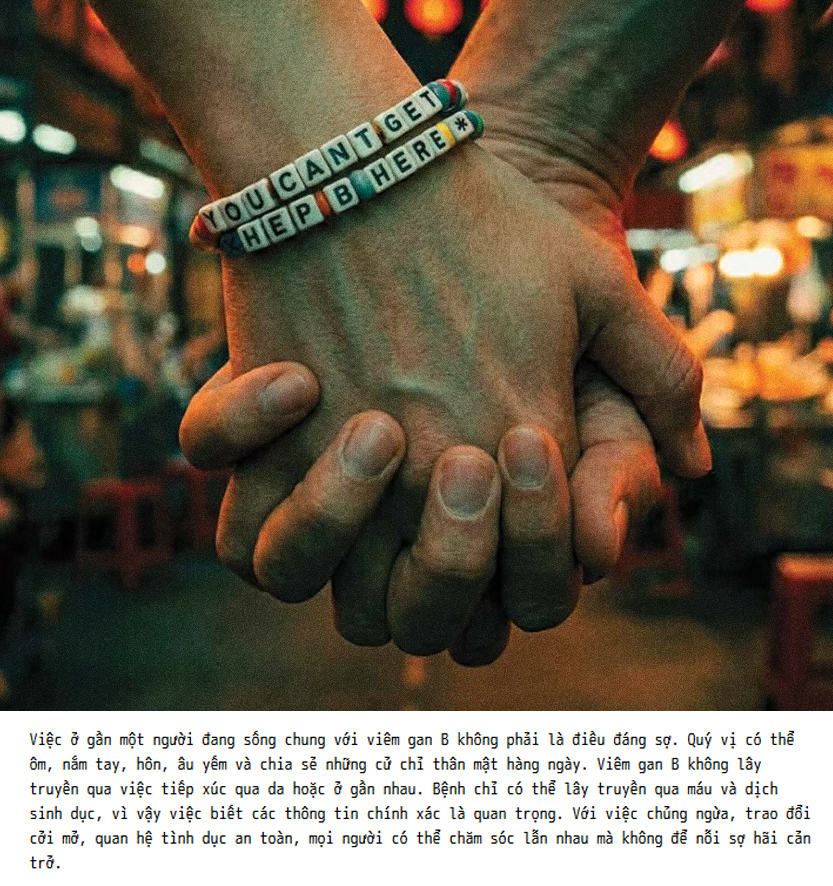
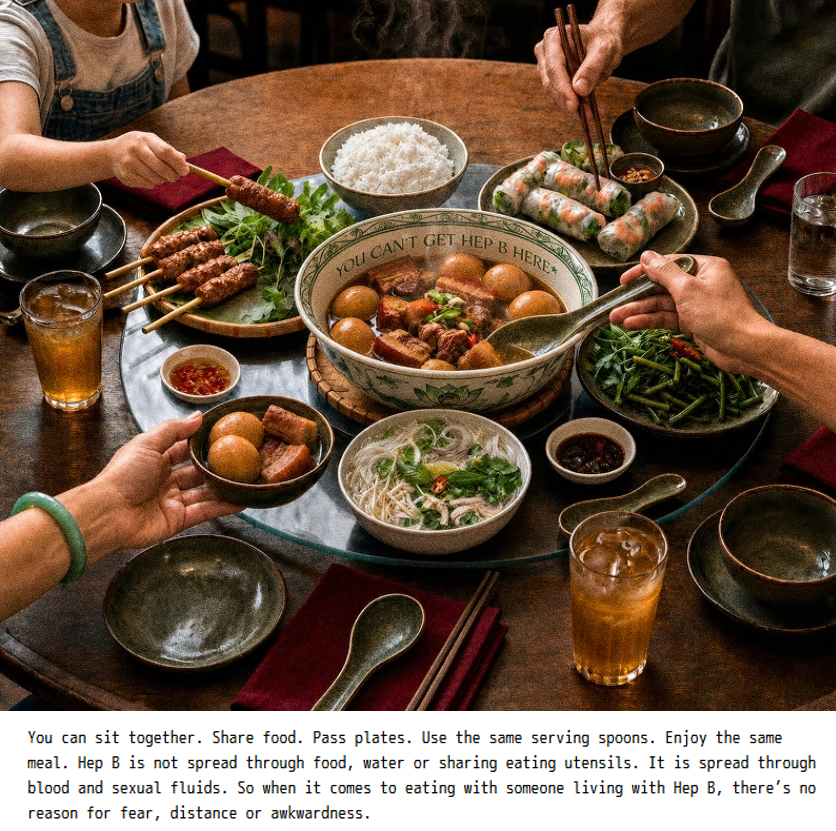
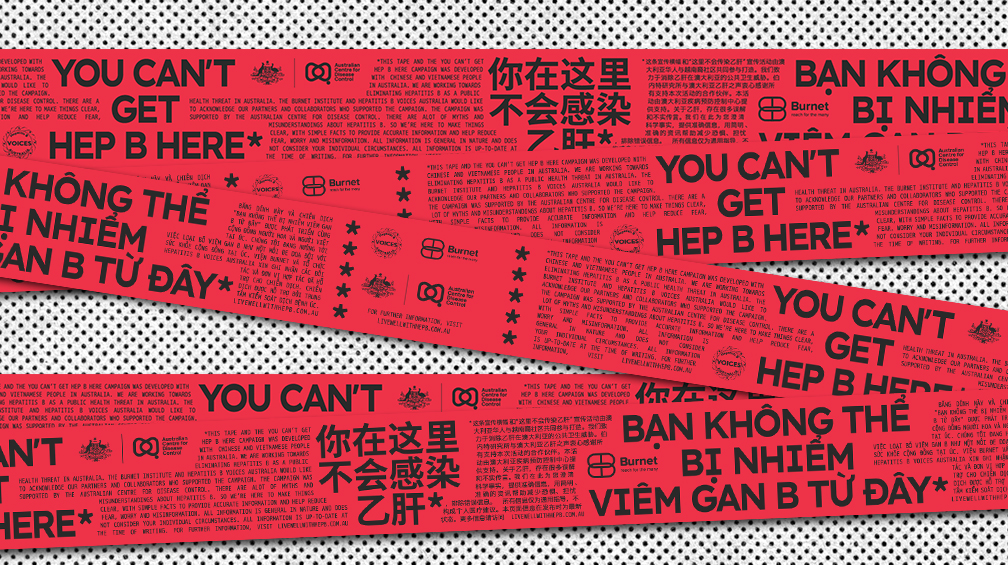
A key feature of the campaign is adhesive red tape emblazoned with the message “You Can’t Get Hep B Here” in simplified Chinese, Vietnamese, and English. The team community-tested this creative element to gauge its cultural impact, as red holds different meanings for different audiences.

The campaign’s visual assets are prominently displayed on its website, and an installation at Chatswood Mall featured a dining table and chairs fully wrapped in red tape, encouraging public interaction with the campaign’s message.
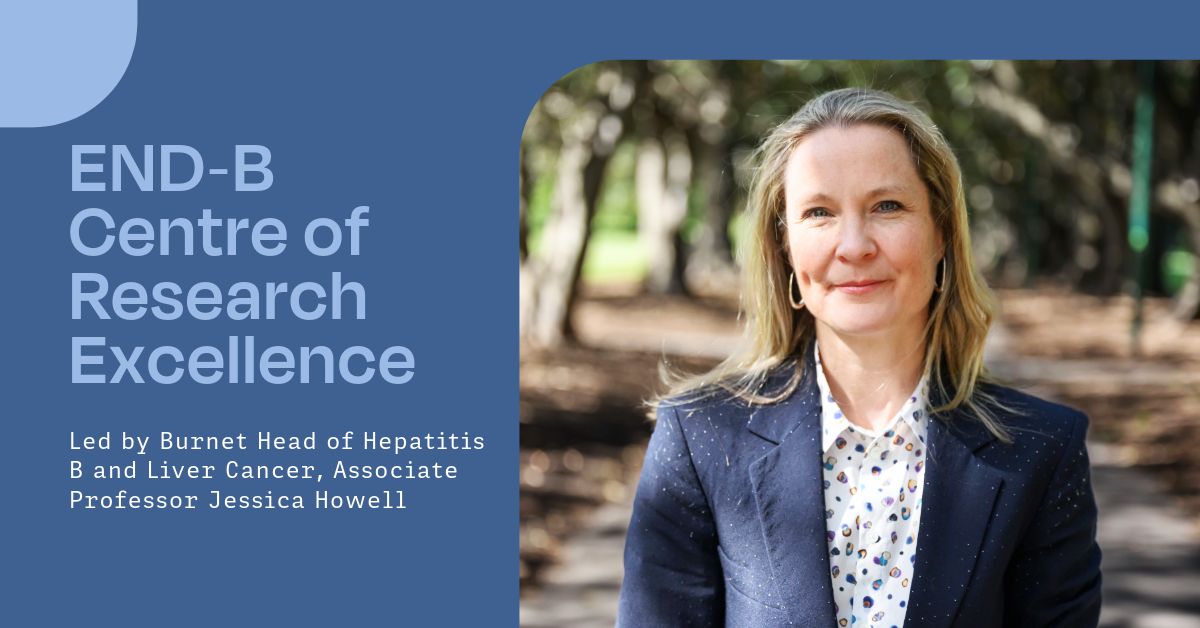
Associate Professor Jessica Howell, Burnet Senior Research Fellow and Co‐Head of Hepatitis B and Liver Cancer, said the campaign responds to a critical gap in community knowledge.
“For more than 50 years, Burnet has been working to understand, prevent and ultimately eliminate hepatitis B. We know that fear is one of the biggest obstacles, and when hepatitis B feels threatening or embarrassing, people avoid information altogether,” she said.
“This campaign is about changing that. By being honest, clear and culturally grounded, we want people to feel informed and empowered, not afraid. Understanding how hepatitis B is and isn’t transmitted is the single most powerful lever we have to motivate access to testing, vaccination and engagement with care.”

Hepatitis B Voices Australia, a community‐first‐led organisation governed by people living with and affected by hepatitis B, ensures the communities most affected are engaged in the national response. Lien Tran, a spokesperson for the organisation, said the community’s involvement in shaping this campaign made a real difference.
“For a long time, misinformation has caused so much unnecessary shame and isolation for people living with hepatitis B. This campaign speaks the truth in our languages, in our voices, and it reflects what our communities actually need to hear,” Ms Tran said.
“You can’t get hepatitis B from sharing a meal or a cup of tea and knowing that can change everything; it can help people get tested, get vaccinated, and get the support they deserve.”
Director‐General of the Australian CDC, Professor Zoe Wainer, said the campaign is an excellent example of what can be achieved when people with lived experience help shape the conversation.
“We are working towards a future where hepatitis B is no longer a public health challenge in Australia, and this campaign is an important step towards that goal,” Professor Wainer said.
“Support for initiatives like this is essential to our response, as everyone deserves access to health information that reflects their needs and resonates with their communities.”
Last updated 1 October 2026
More from:
Enjoyed this article? Subscribe to be notified whenever we publish new stories.
Subscribe for Updates