The Burnet Institute, a research and public action organisation based in Victoria, will lead a new $3 million centre bringing together leading Australian experts to reduce deaths from hepatitis B.
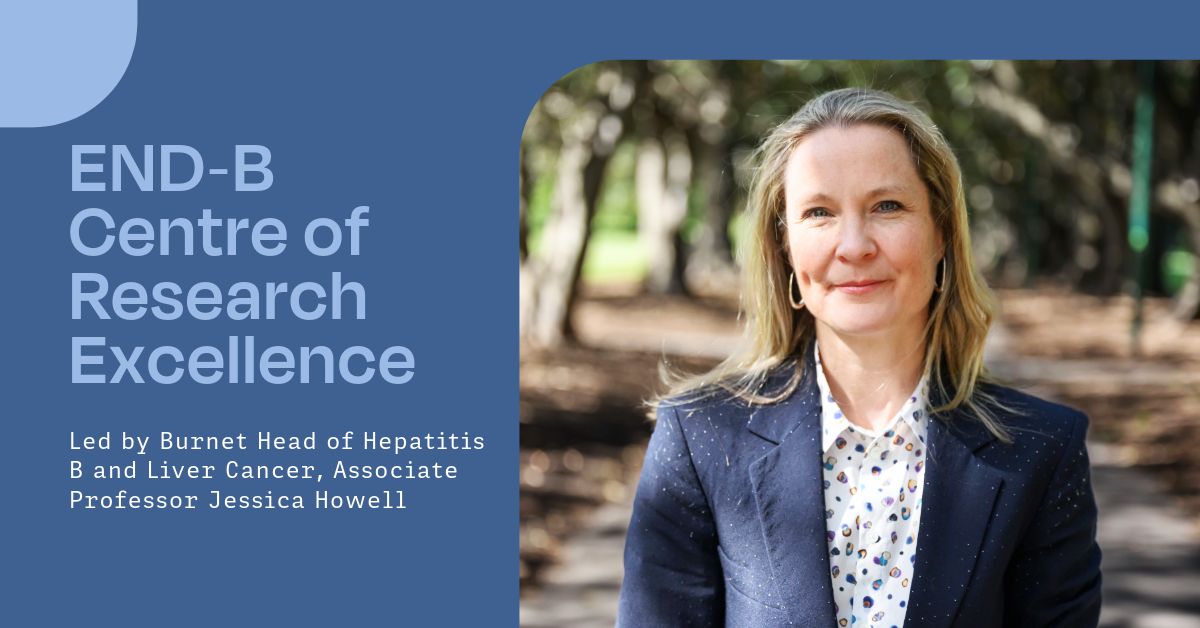
Led by Associate Professor Jessica Howell, who is the Burnet Head of Hepatitis B and Liver Cancer, the End Hepatitis B Centre for Research Excellence (END‐B CRE) will focus on finding the most effective and cost‐effective ways to increase hepatitis B testing, connect people with care and increase treatment uptake across Australia.
END-B CRE will be a Centre for Research Excellence under Australia’s National Health and Medical Research Council, the main statutory authority of the Australian Government responsible for medical research. The funding was awarded through the NHMRC 2026 grants program, which supports collaborative research designed to improve health outcomes and translate research into policy and practice.
In the next five years, the Centre will also build workforce capability and expertise needed to accelerate progress towards reducing hepatitis B‐related deaths in Australia by 2030.
Associate Professor Howell will lead a national investigator team spanning the Menzies School of Health Research, the Westmead Institute for Medical Research, The Kirby Institute, the University of Melbourne, the Doherty Institute, and the Burnet Institute itself.
Currently, there is no widely effective cure for hepatitis B, though recent experimental treatments have been developed with a claimed 20% success rate. However, vaccination is extremely effective, and is both highly recommended and free for all babies born in Australia.
Hep B in SA
An estimated 11,682 people were living with hepatitis B in South Australia in 2024, or 0.62% of the population.
The most common countries of birth for those affected are China, Vietnam, Philippines, Italy, and Greece. The most common languages spoken by those affected are Mandarin, Vietnamese, Cantonese, Greek, and Tagalog/Filipino.
Infant immunisation coverage in SA is close to the 95% target level, at 94.2% of children.
Diagnosis, treatment and care uptake were well below target levels in Australia and in SA specfifically in 2024. SA rates for all three were very similar to the national rates.
- Hepatitis B diagnostic testing has declined in many priority populations in SA.
- Most people in SA have had hepatitis B care in the past, but many have been lost to follow-up and require re-engagement.
- It is estimated that 203 lives have been saved in SA due to hepatitis B treatment since 2000. Further scale-up would avert additional deaths.
Last updated 1 October 2026
More from:
Enjoyed this article? Subscribe to be notified whenever we publish new stories.
Subscribe for Updates