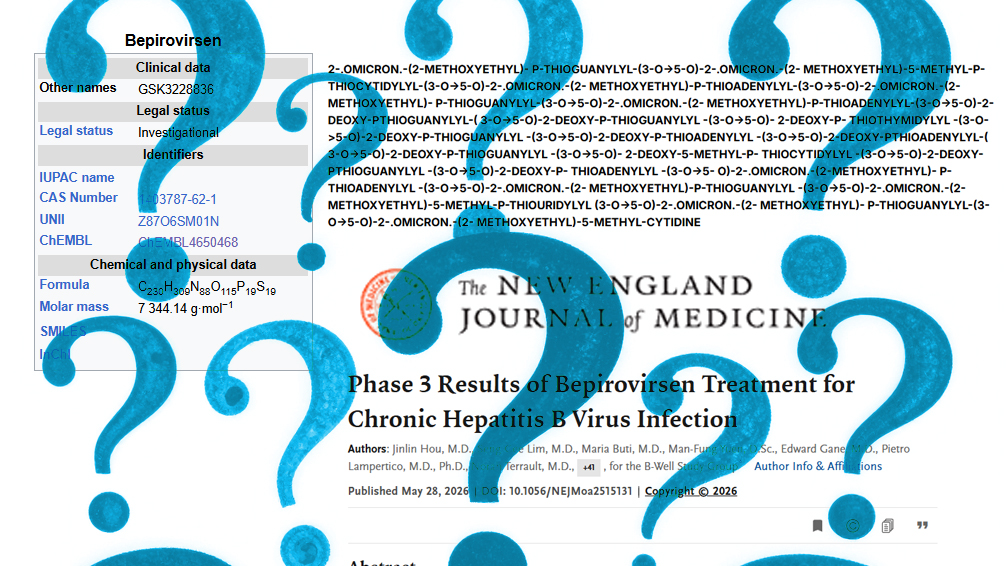
Pharmaceutical giant, GSK, who seem to be leading the field in developing a hepatitis B functional cure, has finally presented the results on their new drug, bepirovirsen. The 254 million people living with hepatitis B globally is a huge potential market for drug companies, and the race to find a cure has become more intense as treatments that deliver a functional cure appear within grasp.
Since the start of the year Community News have been reporting on the details slowly emerging about bepirovirsen, a new drug being touted by GSK as a functional cure for hepatitis B. It was not until the end of May, however, that they were finally willing to present the results of the studies on which these claims have been made.

Chronic hepatitis B affects around a quarter of a billion people worldwide, and until now there has been no especially effective treatment for it, meaning that preventative vaccination (provided free to all newborns in Australia) is the main protection available.
But if you already have hepatitis B, a vaccine will not help you, so the idea of a functional cure is a very important one. The current standard of care typically requires lifelong therapy, with less than one per cent of patients being cured. A functional cure for hepatitis B is defined as one where levels of the virus in a patient’s blood remain undetectable for at least six months after all treatment finishes.
Now we have the results, published in the New England Journal of Medicine, and they are mixed. GSK’s studies showed a 19 per cent rate of functional cure for the overall population of patients in their study, meaning that one in five people will get better if treated properly with bepirovirsen. For people in the study with lower viral activity, 26 per cent achieved a functional cure i.e. one in four patients. Both of these results are based on a six-month course of treatment.

Significantly, 49 per cent of those treated with bepirovirsen for six months had achieved a surface antigen level of ≤100 IU/mL one year after the end of their treatment. This means that even for those who don’t achieve a cure, many will receive some health benefits from having less of a strain on their livers and immune systems.
So how does the treatment work? Health journalist Ed Cara explains it well: “Bepirovirsen, also called bepi, […] is a type of drug known as an antisense oligonucleotide, and it’s designed to bind to the messenger RNA of the virus, limiting its ability to make more of itself and produce key proteins. It also stimulates the immune system to better recognize and target the virus for destruction. Though bepi may not eradicate every single trace of hepatitis B, it might allow the body to fully control the infection without further medication, essentially providing a cure for some.”
Side effects from bepirovirsen were also generally mild and well tolerated, including symptoms like injection-site redness and pain. However, some people on the drug did experience an brief increase in enzymes levels that can be a sign of liver damage, but these soon dropped back to normal levels.

A twenty-fold increase in cure rate is obviously a dramatic improvement, but on the other hand it still leaves 81 per cent of those living with hepatitis B facing a lifelong chronic disease. Also, only time will tell if these infections remain cured over longer periods of time. But this is the first significant advance in hepatitis B treatment in quite some time, and a promising result for those living with the virus.
Bepirovirsen is being considered by the food and drug safety authorities of a number of countries, though not yet Australia. We await developments with great interest.
Hep B in SA
An estimated 11,682 people were living with hepatitis B in South Australia in 2024, or 0.62% of the population.
The most common countries of birth for those affected are China, Vietnam, Philippines, Italy, and Greece. The most common languages spoken by those affected are Mandarin, Vietnamese, Cantonese, Greek, and Tagalog/Filipino.
Infant immunisation coverage in SA is close to the 95% target level, at 94.2% of children.
Diagnosis, treatment and care uptake were well below target levels in Australia and in SA specfifically in 2024. SA rates for all three were very similar to the national rates.
- Hepatitis B diagnostic testing has declined in many priority populations in SA.
- Most people in SA have had hepatitis B care in the past, but many have been lost to follow-up and require re-engagement.
- It is estimated that 203 lives have been saved in SA due to hepatitis B treatment since 2000. Further scale-up would avert additional deaths.
Data generated by The Doherty Institute using modelling and routinely collected data, funded by the Australian Government.
Last updated 22 September 2026
More from:
Enjoyed this article? Subscribe to be notified whenever we publish new stories.
Subscribe for Updates