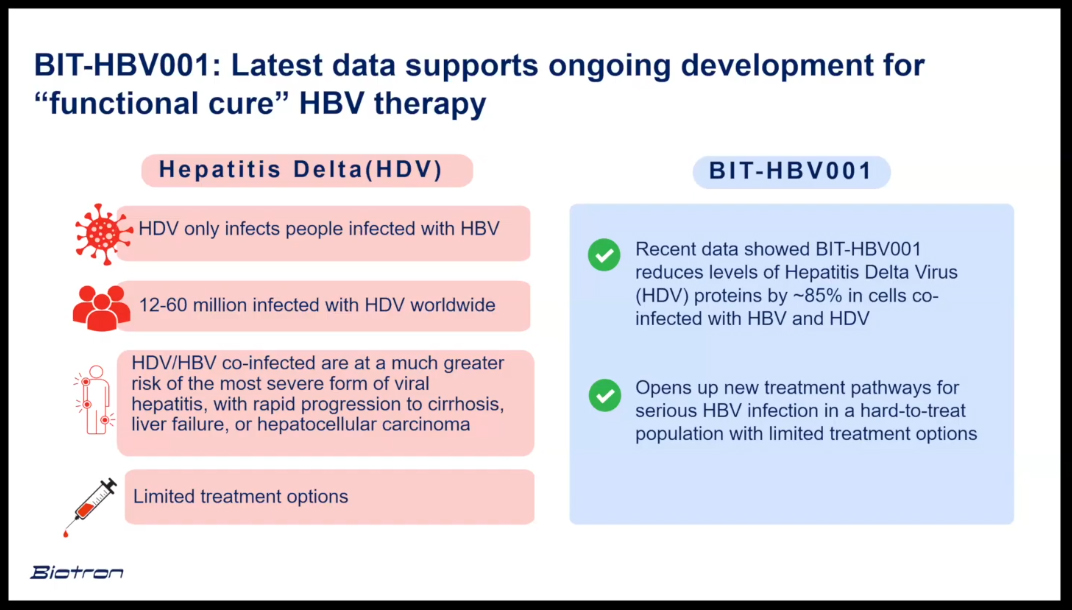
Sydney-based pharmaceutical company Biotron is investigating a new drug candidate that shows promise in treating both hepatitis B and hepatitis D. Hepatitis B on its own is in desperate need of an effective, broadly applicable cure, and HBV/HDV co-infection is associated with the most severe form of viral hepatitis and remains an area of significant unmet medical need.
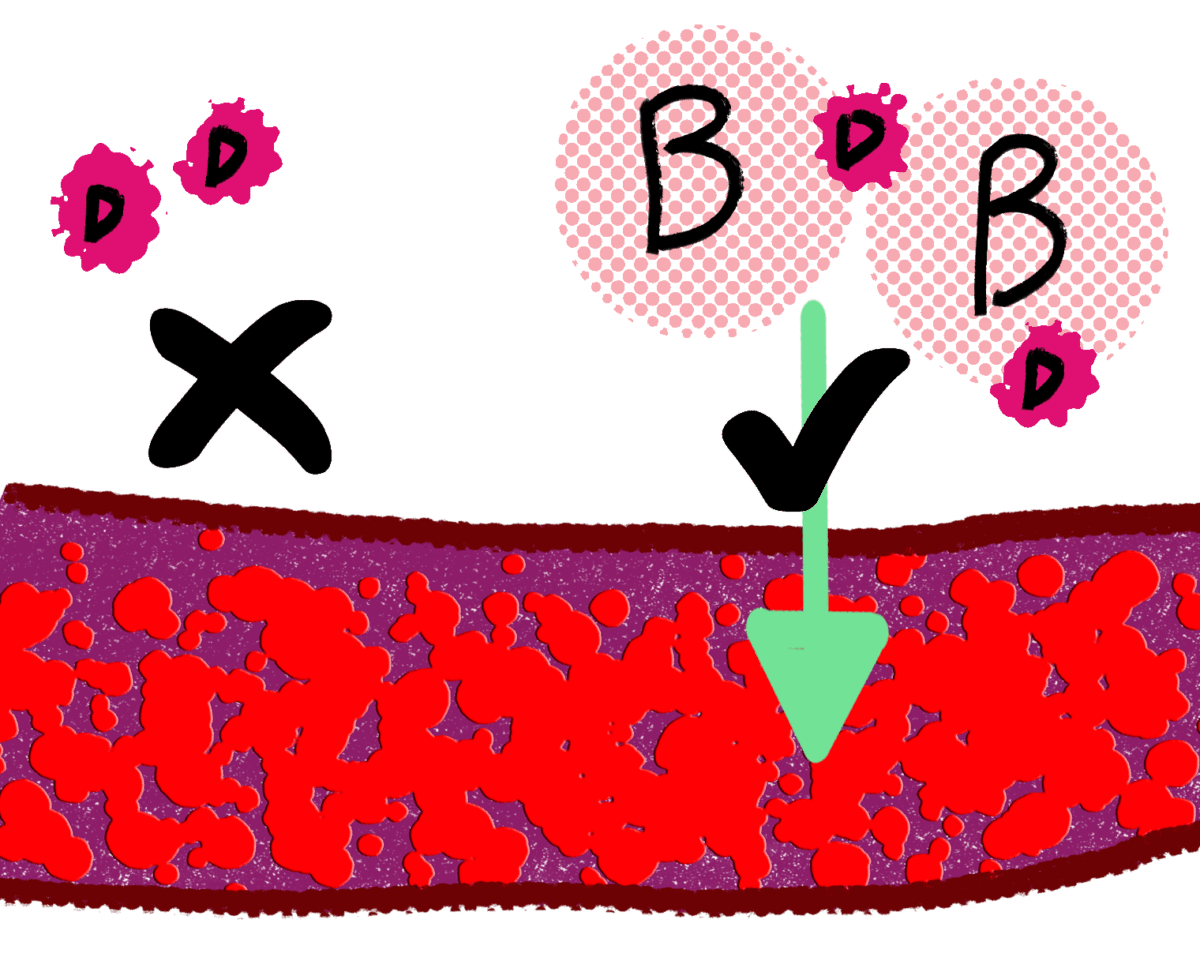
Hepatitis D is a virus that can only infect people who are also living with hepatitis B, as it requires the B virus’s biological machinery to be able to reproduce itself. (See here for a full backgrounder on hepatitis D.)
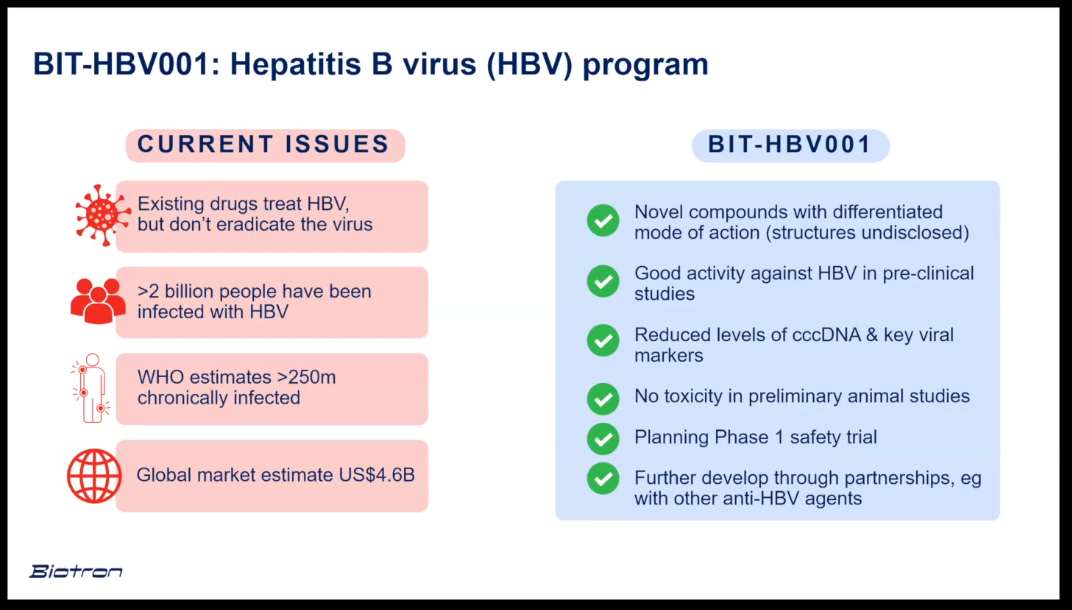
Biotron’s candidate drug currently has the technical name BIT-HBV001, and previous tests in 2025 demonstrated antiviral activity against hepatitis B in two different animal models of hepatitis liver disease and infection. In both experiments, dosing every 10 hours over 16 days produced significant reductions in HBV DNA, ranging from 62-65% depending on the type of animals tested.
Now, new studies performed at The Scripps Research Institute, San Diego, have confirmed BIT-HBV001’s efficacy and also shown it to be useful in fighting hepatitis D as well.
In the first study, the activity of BIT-HBV001 was directly compared with Hepcludex (currently TGA-approved in Australia for the treatment of hepatitis D). Cells infected with HBV and HDV were treated with either BIT-HBV001 or Hepcludex at a range of concentrations. After incubation for several days, the levels of virus-specific markers were measured to determine how well the drugs had worked against the viruses. Both drugs showed strong antiviral activity against both viruses.
In a second study, BIT-HBV001 and Hepcludex were tested in combination with each other in cells infected with HBV and HDV. This study was performed to determine whether the treatments would work better in combination than either works on their own. The results indicated significant antiviral synergy for the BIT-HBV001 and Hepcludex combination across three different parts of the HBV and HDV replication process. This indicates that lower amounts of each drug may be used in combination achieve the same level of HBV/HDV inhibition as either on their own.
Biotron now plans to scale up production of a high-quality amount of BIT-HBV001 so that they can commence human trials in the later part of 2027.
As always, while this news is welcome, we always respond cautiously until the evidence is published in a peer-reviewed journal. The Hepatitis SA Community News will keep you informed as we learn more about this treatment.
Posted 24 August 2026
More from:
Enjoyed this article? Subscribe to be notified whenever we publish new stories.
Subscribe for Updates