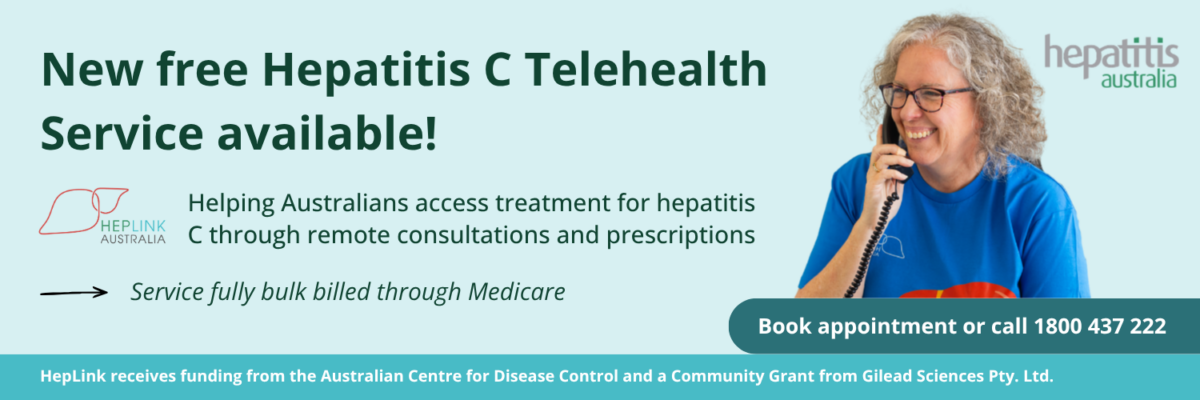
A new national hepatitis C telehealth service is making it easier for people to get assessed, tested and treated for hepatitis C in Australia. Launched in June by Hepatitis Australia, as part of its HepLink information and support service, the Hep C Telehealth Service is fully bulk-billed and free to any adult with a Medicare card anywhere in Australia, with or without a referral!
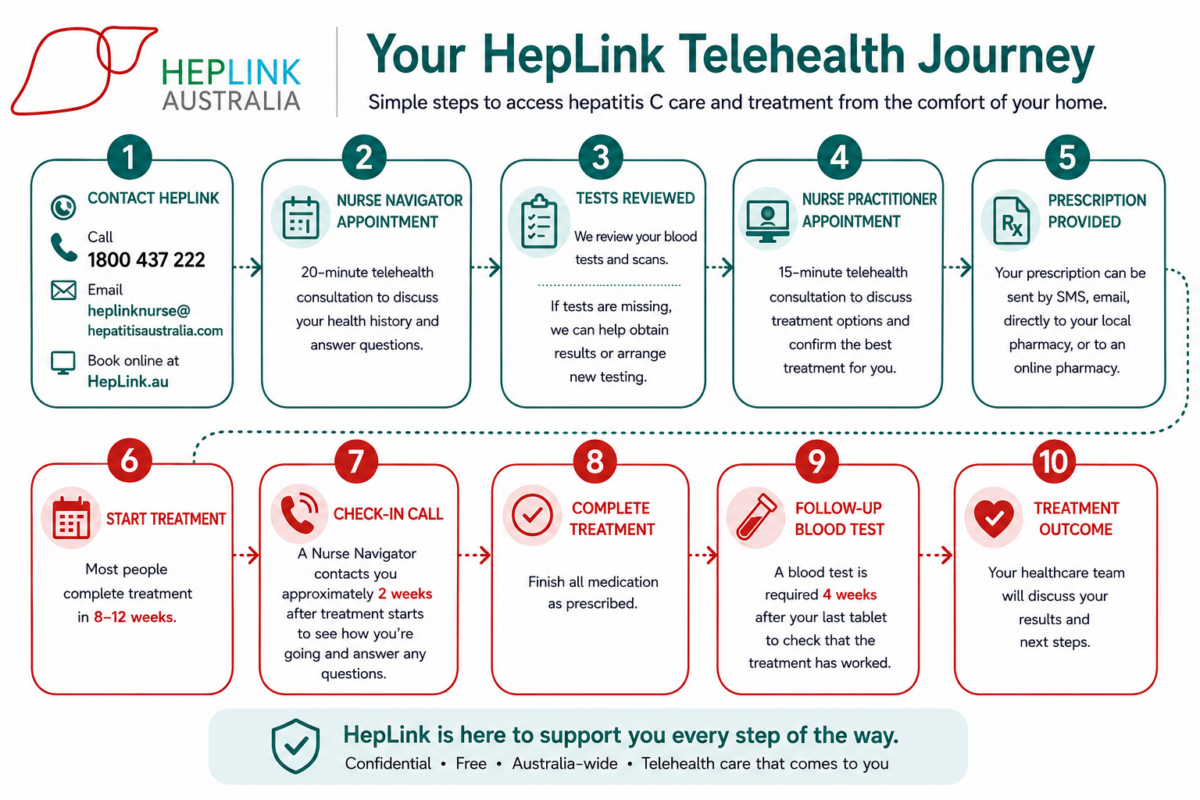
Anyone in Australia can call 1800 437 222 or visit heplink.au to speak confidentially with the HepLink Nurse Navigator who can help you with with treatment pathways, referrals, and practical advice. The Service can also provide clinicians with expert guidance on clinical decision-making, navigating complex client needs, and improving patient outcomes. In South Australia, calling this number will connect you with Hepatitis SA, who, with your consent, will send your number to the nurse navigator, who will ring you back and help you through the same process as with callers from other states and territories.
Your Pathway
The telehealth service provides:
- Clear information about hepatitis C testing
- Support to arrange blood tests
- Virtual clinical consultations where needed
- Rapid access to prescriptions for curative treatment, which can be sent to your phone
The Cure
The landmark PBS listing of new-generation hepatitis C medicines on 1 March 2016 transformed hepatitis C treatment, introducing a highly effective cure with minimal side-effects. This has delivered extraordinary public health results–over 110,000 Australians have commenced PBS-subsidised hepatitis C treatment, with around 100,000 cured.
Since the listing of the new generation of hepatitis C treatments in 2016:
- The number of people living with chronic hepatitis C in Australia fell by 61% since 2015
- Deaths among Australians living with hepatitis C have fallen by around 22% since 2016
- Prevalence of hepatitis C among people who inject drugs has dropped dramatically
Critically, treatment has also shifted into primary care settings, with almost half of first treatments prescribed by GPs, making hepatitis C cures much more accessible in local communities across Australia.

But an estimated 63,000 Australians are still living with chronic hepatitis C, and many are unaware that they have it. This means that we always need new and innovative ideas for getting hepatitis C care to the people in Australia who still need it, something that the national telehealth service aims to achieve.
With only four years until 2030, the year in which Australia has pledged to eliminate viral hepatitis, we need to find the people who remain undiagnosed or disconnected from care.
Life-Changing
Gracie, who has lived experience of hepatitis C and now a peer worker, spoke about the challenges of living with the virus and the life-changing impact of the cure.
“When I was first diagnosed, I was very worried. I thought hepatitis C would take ten years off my life, and I was nervous about telling people because of the stigma around it. At the time, I had heard about the old hepatitis C treatments–that they made you very ill and wouldn’t necessarily work.
“But I read about a new hepatitis C treatment that was coming out, and I was keen to try that. It was simply a course of tablets for 12 weeks, and I started feeling clearer and more energetic even before I finished. The current treatment is a cure.
I want people to know how easy the hepatitis C cure is now, that there is support available and that getting treated has minimal side effects. I am living proof that the cure works.
“You do not always realise how much the virus is affecting you until it’s gone. Once I was cured, I felt healthier, clearer and relieved that I no longer had to carry that worry… Not having to worry about explaining it to people and feeling like you are different, diseased even.
“A lot of people live with hepatitis C for years without knowing it because it often does not make you feel sick straight away. It can take a very long time, 20+ years, before the symptoms begin.
“I want people to know how easy the hepatitis C cure is now, that there is support available and that getting treated has minimal side effects. I am living proof that the cure works.”
Testing—The Most Powerful Tool
Chris Wallis, a nurse practitioner with more than 18 years’ experience now working with HepLink, said the new service is focused on making treatment even easier to access.

“Many Australians are simply unaware that they have contracted hepatitis C or that a straightforward cure now exists. Others live a long way from specialist services and assume treatment will be complicated to access.
“If there is even a small chance you could have been exposed years ago through injecting drug use, a tattoo, or a medical procedure overseas, my message is simple: get tested. Testing is the most powerful tool we have to eliminate hepatitis C.
“I have had patients tell me they had absolutely no idea how unwell they felt until the virus was gone. Once cured, they could not believe how healthy and clear they actually felt.”
Book an Appointment
HepLink is the national hepatitis information and linkage service operated by Hepatitis Australia in partnership with community hepatitis organisations nationally. HepLink is funded by the Australian Government Centre for Disease Control. The HepLink telehealth service is made possible through a community grant from Gilead Sciences Australia.
To book an appointment, visit https://www.heplink.au/book_telehealth or call 1800 437 222 (1800 HEP ABC)
Last updated 12 August 2026
More from:
Enjoyed this article? Subscribe to be notified whenever we publish new stories.
Subscribe for Updates