Bringing testing closer to where people live, work and access services is helping Hepatitis SA improve access to hepatitis C testing and reduce stigma across regional South Australia. In September and October, Hepatitis SA worked alongside health professionals, prison staff and community organisations to deliver hepatitis C testing in Port Augusta, reaching hundreds of people across both custodial and community settings.
Reaching people in prison
From 14–18 September, Hepatitis SA partnered with the Flinders University Point of Care Testing Centre, Viral Hepatitis Nursing Services and Port Augusta Prison Health and Corrections staff to deliver an intensive hepatitis C testing campaign at Port Augusta Prison.
Over five days, 356 prisoners were tested.
The team took testing directly into prison units and workplace areas, including the kitchen, laundry, woodwork, metalwork and textiles. This approach made testing more accessible to prisoners who were working and might otherwise have missed the opportunity.
Three GeneXpert machines enabled the team to process multiple samples efficiently, with testing supported by a multidisciplinary team of health professionals and prison staff.
The campaign identified three people with current hepatitis C infection, including one new infection and two reinfections. All three were referred to the prison health service for treatment.
… some prisoners could simply say they were there for the Skittles!
Strong collaboration between prison health and Corrections staff was central to the campaign’s success. Their support enabled the team to access units and workplaces throughout the week, even when modified prison regimes required adjustments to the schedule.
Small gestures also helped make a difference. Offering prisoners packets of Skittles provided a light-hearted incentive to attend testing and helped reduce the stigma associated with getting tested. As one of the team’s favourite observations, some prisoners could simply say they were there for the Skittles!
Connecting with the wider community
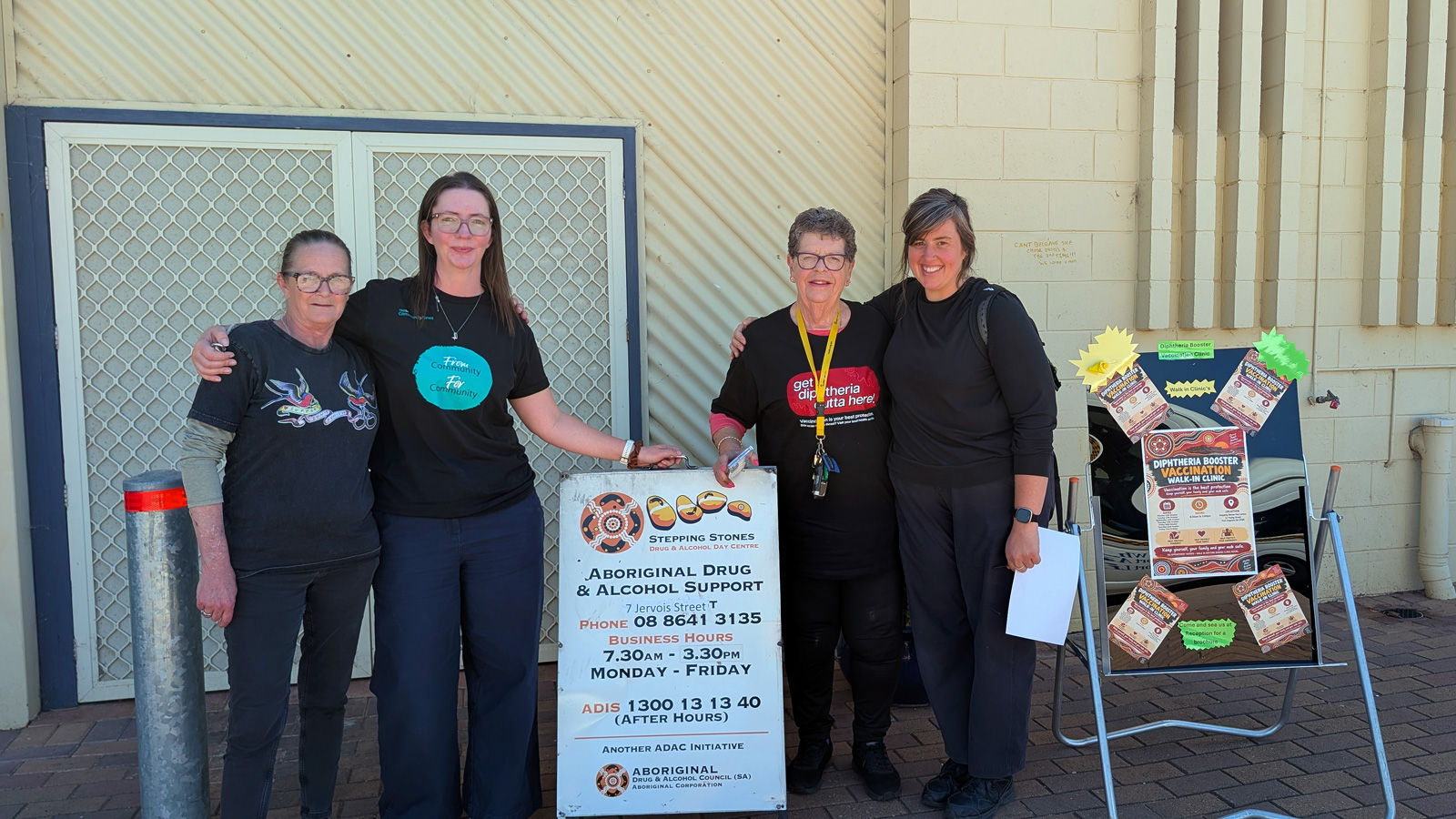
From 13–15 October, Hepatitis SA continued its work in Port Augusta, providing community-based testing in partnership with local services.
Testing was offered through four locations: residential facility Lemongrass, day centre Stepping Stones, a local pharmacy and rehabilitation facility Footsteps. Providing clinics at these sites brought hepatitis C testing into familiar and accessible community settings. In all, 109 people were tested across these locations.
No positive results were identified through the community testing activities. However, providing opportunities for people to check their hepatitis C status remains an important part of prevention, early detection and supporting community health.
Working with local services allowed the team to connect with people where they already live, work and seek support, helping make testing a more accessible and routine part of healthcare.

Working together to improve access
Out of these two initiatives, 465 people were tested for hepatitis C in Port Augusta.
The campaigns demonstrated the value of strong partnerships, flexible approaches to service delivery and taking testing directly to people rather than expecting them to navigate barriers to access.
Just as importantly, the team received positive feedback from both prison health staff and prisoners, who expressed their appreciation for the work and the opportunity to access testing.
Hepatitis C is preventable and curable, and accessible testing is an important step towards ensuring people can be connected with treatment when needed. By continuing to work alongside regional communities, health services and custodial settings, Hepatitis SA is helping reduce barriers, challenge stigma and contribute to the goal of eliminating viral hepatitis as a public health threat.
Hepatitis SA gratefully acknowledges Gilead Sciences for supporting the Port Augusta Prison hepatitis C testing campaign and AbbVie for supporting the community testing initiative. Their support helped make these important testing activities possible.
Last updated 3 November 2026
More from:
Enjoyed this article? Subscribe to be notified whenever we publish new stories.
Subscribe for Updates