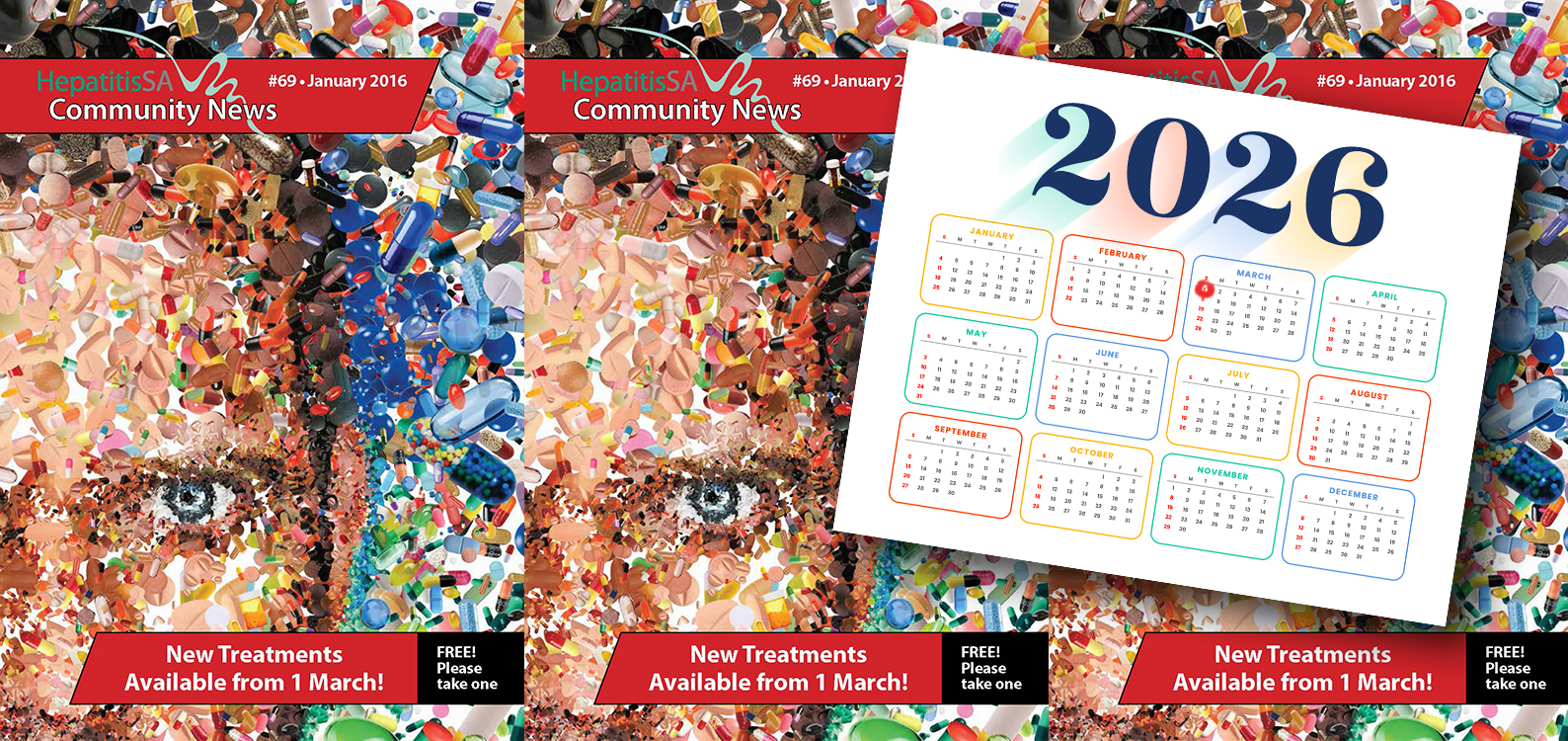
Ten years ago, on 1 March 2016, Australia became the first country to publicly subsidise new direct-acting antiviral (DAA) hepatitis C treatments for the entire population, no matter their condition or location.
The success of this has been dramatic:
- New hepatitis C infections in Australia have decreased by 58% since 2015.
- More than 100,000 Australians have received curative hepatitis C treatments.
- Current hepatitis C infection among people attending needle and syringe programs has declined from 51per cent in 2015 to 12 per cent in 2023.
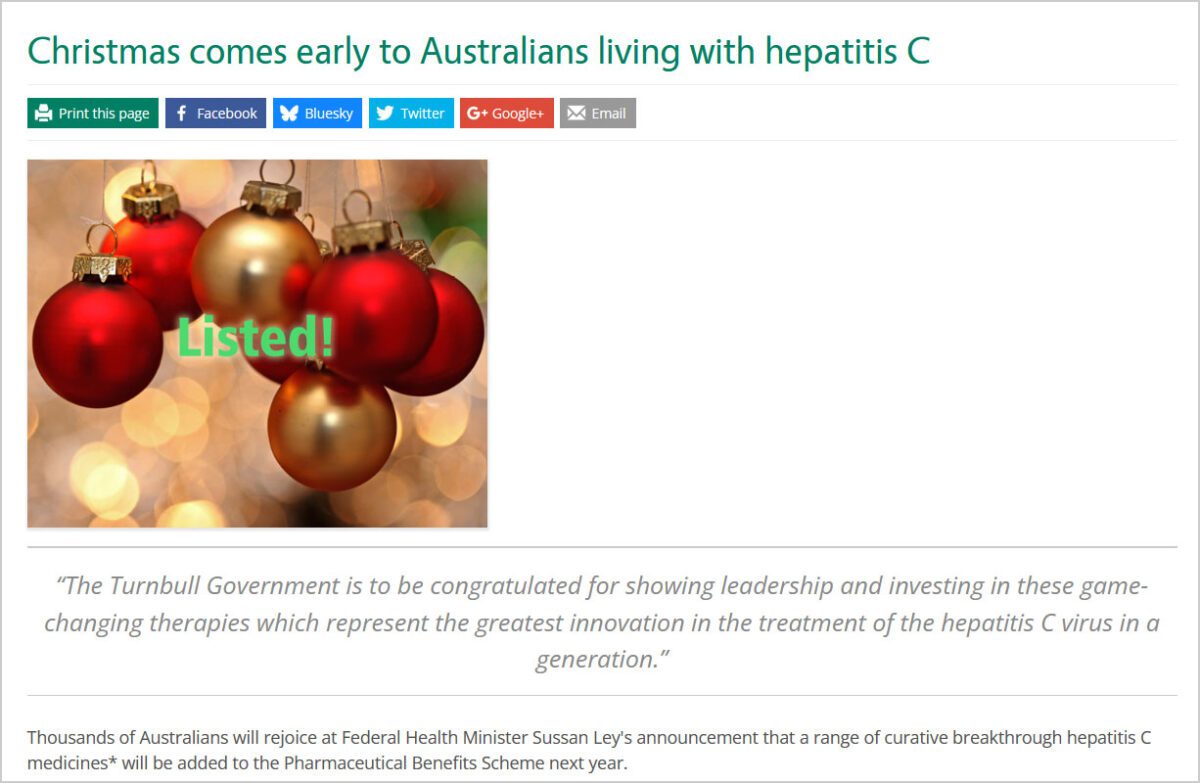
Announcing the $1 billion funding just before Christmas in 2015, the then Federal Health Minister, Sussan Ley, described the listing of the drugs on the Pharmaceutical Benefits Scheme (PBS) as a “watershed moment”.
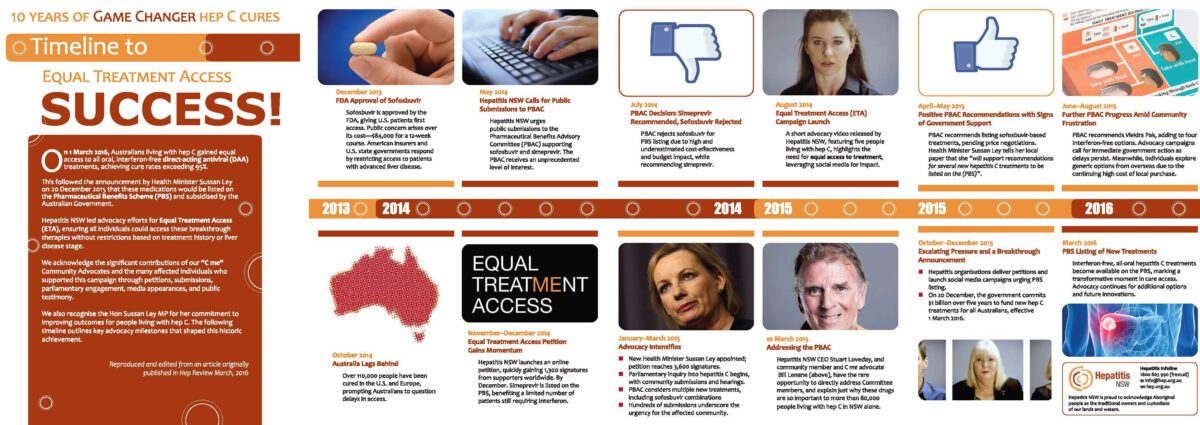
“The drugs are faster, less invasive and inflict fewer side effects than anything currently available,” she said. “Hepatitis C takes a heavy toll on patients and their families, but also the health system and the economy.”
Describing the decision as “simply terrific”, Hepatitis Australia’s CEO at the time, Helen Tyrell, said many people had been anxiously waiting for that announcement and it was wonderful news and a relief to have an end to the uncertainty.
“We are overjoyed that the waiting is almost over,” she said.
“It was just before Christmas,” recalled one Hepatitis SA member. “I heard the news on the radio in the morning as I was getting out of bed. I sat back down and cried, thinking of the people I knew who had missed out and at the same time, feeling relief and happiness for others whose lives would be saved.
“I don’t agree with many of Sussan Ley’s political positions but I will always appreciate her ability to see the good in this, taking advice and coming up with a great plan for funding DAAs for hepatitis C.”
The DAA listing on the PBS had come as a surprise to some. “Until the announcement, there had not been much to make me feel positive about the drugs getting listed,” said Dana in 2016. She and her partner had both been living with hepatitis C.
“The news has changed the whole outlook in our household. Before, when we talked about treatment, we’d be wondering if it would be better to do it together so we’d both be irritable together, or to do it one after the other so the boys don’t have to put up with two irritable parents all at once. Now, that’s not an issue any more.
“It’s also very sad to think about people who’d just missed out,” she added, referring to friends who had recently died because of hepatitis C.
For Elle, the Government’s announcement was a lovely early Christmas present. “I had been waiting 26 years for an effective treatment that wouldn’t affect my ability to function, an alternative treatment that actually worked, wouldn’t do more harm, or make me feel unwell and need to take time off work like I’d have to with interferon combination therapies,” she said.
Elle was cured in 2016 with the DAA’s.
It may sound silly but I was surprised to find that I felt like I could fly, the feeling of freedom was so immense!
“Even though I had been looking forward to accessing the new treatment as soon as possible and felt very lucky that they were accessible to me and affordable unlike in other countries, I had no idea that I would feel so free when I was told that I had been cured,” she said. “The hep C virus was not detected and I could no longer infect others!
“While the onus is on others to treat all blood as if it is infectious I had no idea that the feeling that I could pass on hep C to someone else had weighed so heavily upon me.
“This was made even more evident when I had my first blood nose after being cured. I can barely describe the wonderful feeling of being able bleed freely without fear of contaminating surfaces and rushing around to get tissues or something to quickly control the bleeding and keep the soiled tissues away from others.
“It may sound silly but I was surprised to find that I felt like I could fly, the feeling of freedom was so immense!”
Hepatitis SA’s CEO, Kerry Patterson, agrees.
“It was life-changing for so many South Australians living with the virus, who are now able to take pills for two to three months with minimal side effects and, for the vast majority, be cured,” she says.
“It’s so different to the lengthy, debilitating old treatments, involving injections, which had much less likelihood of a cure. Together with innovations in hepatitis C rapid testing techniques in the intervening years, Australia is well placed to achieve the global goal of hepatitis C elimination by 2030.”
In fact, over time, the DAAs have shown themselves to be able to cure almost 99% of people who complete the course of medication.
Hepatitis SA encourages everyone to get tested and treated for hepatitis C! For more information on hepatitis C cure and where to get tested, call us on 1800 437 222.
Last updated 3 June 2026
More from:
Enjoyed this article? Subscribe to be notified whenever we publish new stories.
Subscribe for Updates