
Australia has taken a significant step in its commitment to ending hepatitis B and C as public health challenges, with the launch of the Fourth National Hepatitis B Strategy 2025–2030 and the Sixth National Hepatitis C Strategy 2025–2030.
These new strategies set the next stage of Australia’s world-leading national response, strengthening prevention, improving early diagnosis and ensuring people can access treatment and care. Importantly, they also cover the period up to 2030, when Australia has committed to to eliminating viral hepatitis.
Assistant Health Minister Rebecca White, who launched the strategies, talked about the current state of the hepatitis response in Australia. “Too many people are living with viral hepatitis without knowing it or without the support they need and that’s what we’re working to change, ” she said. “These strategies focus on what makes the biggest difference, earlier testing, faster diagnosis and making sure people can access treatment and care without barriers.

“People with lived experience, Aboriginal and Torres Strait Islander communities, community and peer organisations, clinicians, researchers, and state and territory governments all contributed to shaping the strategies. This extensive consultation means they are grounded in evidence, informed by lived experience, and responsive to the diverse needs of communities across Australia. Using these two strategies as our compass, Australia can deliver one of the world’s most successful viral hepatitis elimination efforts.”
Following extensive national consultation, the strategies build on past successes. As well as elimination, they outline Australia’s national approach to:
- reduce illness and deaths caused by hepatitis B and hepatitis C
- improve diagnosis, treatment and long-term care uptake
- reduce stigma and discrimination
- ensure people can access care regardless of where they live
- develop a strong evidence base for action.
Why the strategies matter
Australia has made important progress under the previous national hepatitis strategies. This includes increasing hepatitis B vaccination rates in children and improved access to hepatitis C treatments. However, despite effective prevention, testing and treatment tools, hepatitis B and C remain leading causes of liver disease and liver cancer in Australia. Many people continue to experience late diagnosis, stigma and difficulty accessing ongoing care.
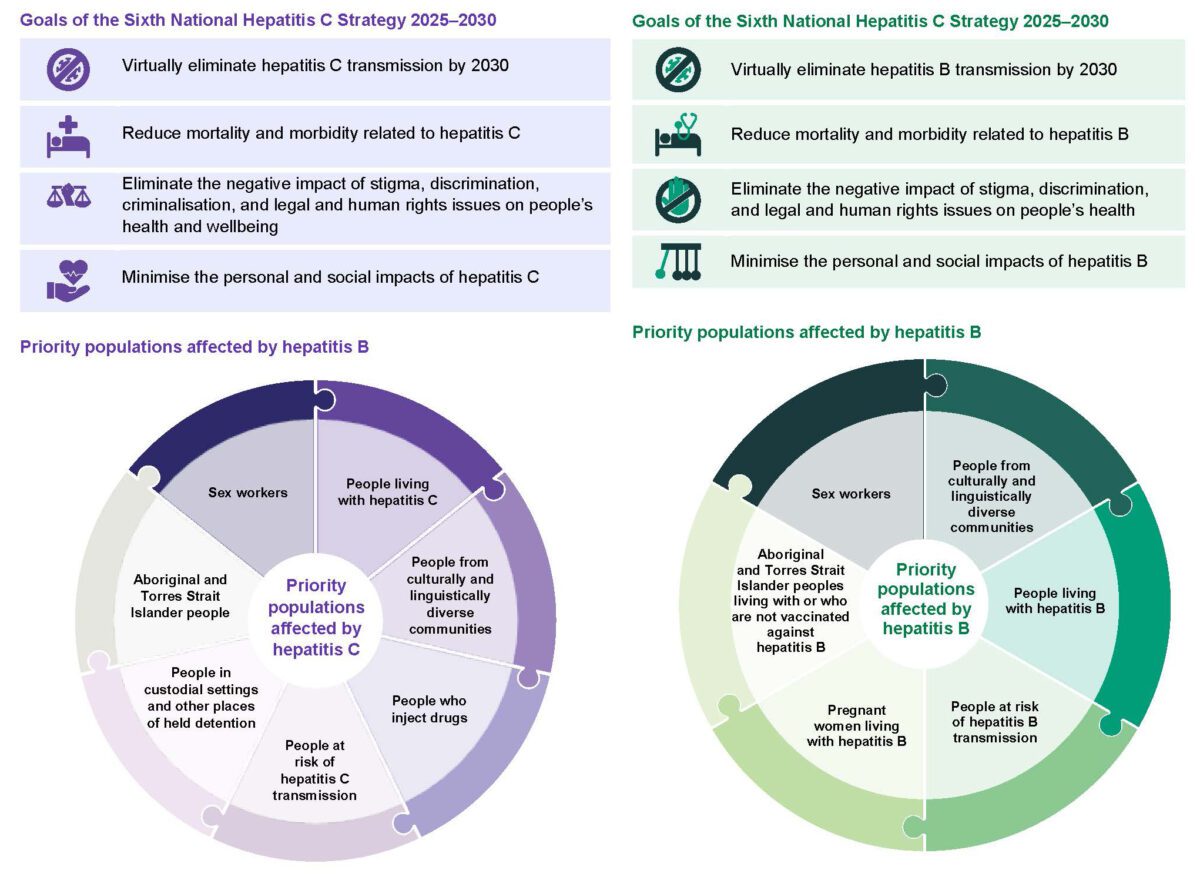
The new strategies were shaped through wide-ranging consultation, including with people with lived experience, to identify priority populations, gaps in the current response, and the action needed to accelerate progress over the next 5 years.
They are endorsed by:
- the Blood Borne Viruses and Sexually Transmissible Infections Subcommittee (BBVSS)
- the Australian Health Protection Committee
- Commonwealth and state and territory health ministers
- Hepatitis Australia
and their implementation will be led by the new Australian Centre for Disease Control (CDC), which will be in charge of national coordination and progress tracking, with:
- implementation supported through action plans developed in partnership with Hepatitis Australia, as well as other key viral hepatitis stakeholders.
- continued collaboration across governments, health services, community organisations and researchers.
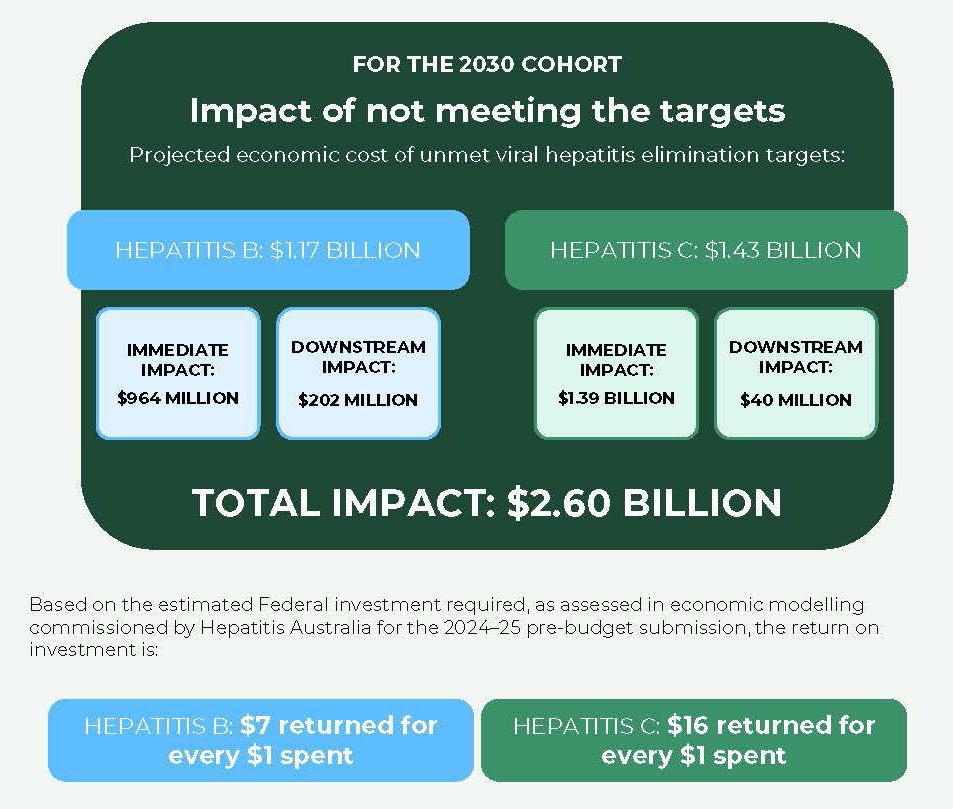
It’s in the interests of everyone, even those whose own lives might never be touched by hepatitis, to pursue elimination. Between now and 2030 Australia could avoid at least $2.6 billion in health and broader social impact costs if the national strategies targets are met.
Key areas of focus
The hepatitis B strategy emphasises vaccination, early diagnosis, lifelong monitoring and liver cancer prevention. The hepatitis C strategy focuses on finding people who are undiagnosed or disengaged from care and supporting access to curative treatment.
Both strategies highlight that viral hepatitis disproportionately impacts several key populations. They prioritise action and set targets across 6 shared areas:
- education and prevention
- testing, treatment and management
- equitable access to care and support
- a skilled and supported workforce
- reducing stigma and discrimination
- strong data, surveillance, research and evaluation.
The strategies build on existing Government investment so Australians can live free from the impact of hepatitis B and C, including $51.7 million over 3 years to continue the national viral hepatitis elimination program, and $23.7 million to support on-the-ground hepatitis B and C initiatives, including for point-of-care testing, treatment and care, and pilot hepatitis B programs
Posted 2 April 2026
More from:
Enjoyed this article? Subscribe to be notified whenever we publish new stories.
Subscribe for Updates